

A building you walk past during the day without stopping can catch your eye in the evening. In the right light, you might notice the depth of a window, the rhythm of the columns, or the texture of the stone. The architecture was there all along, but the light has changed the relationships between its elements and, with them, the way you approach the building. Is catching our attention enough, though?
Can architectural lighting really move us?
Lighting design can create an image that evokes curiosity, calm, a sense of distance, or even discomfort. Emotion doesn’t always mean a warm, pleasant atmosphere.
What We Choose to See
When we look at a façade, we’re interested in what gives it a sense of volume.
A column reads as a three-dimensional form because one side catches the light while another stays in shadow. An entrance can stand out when the surrounding surfaces are more subdued. A wall’s texture changes with the direction of the light falling on it. These choices shape how the building looks at night.
Darkness is a design decision. We need it to see and understand what we choose to highlight.
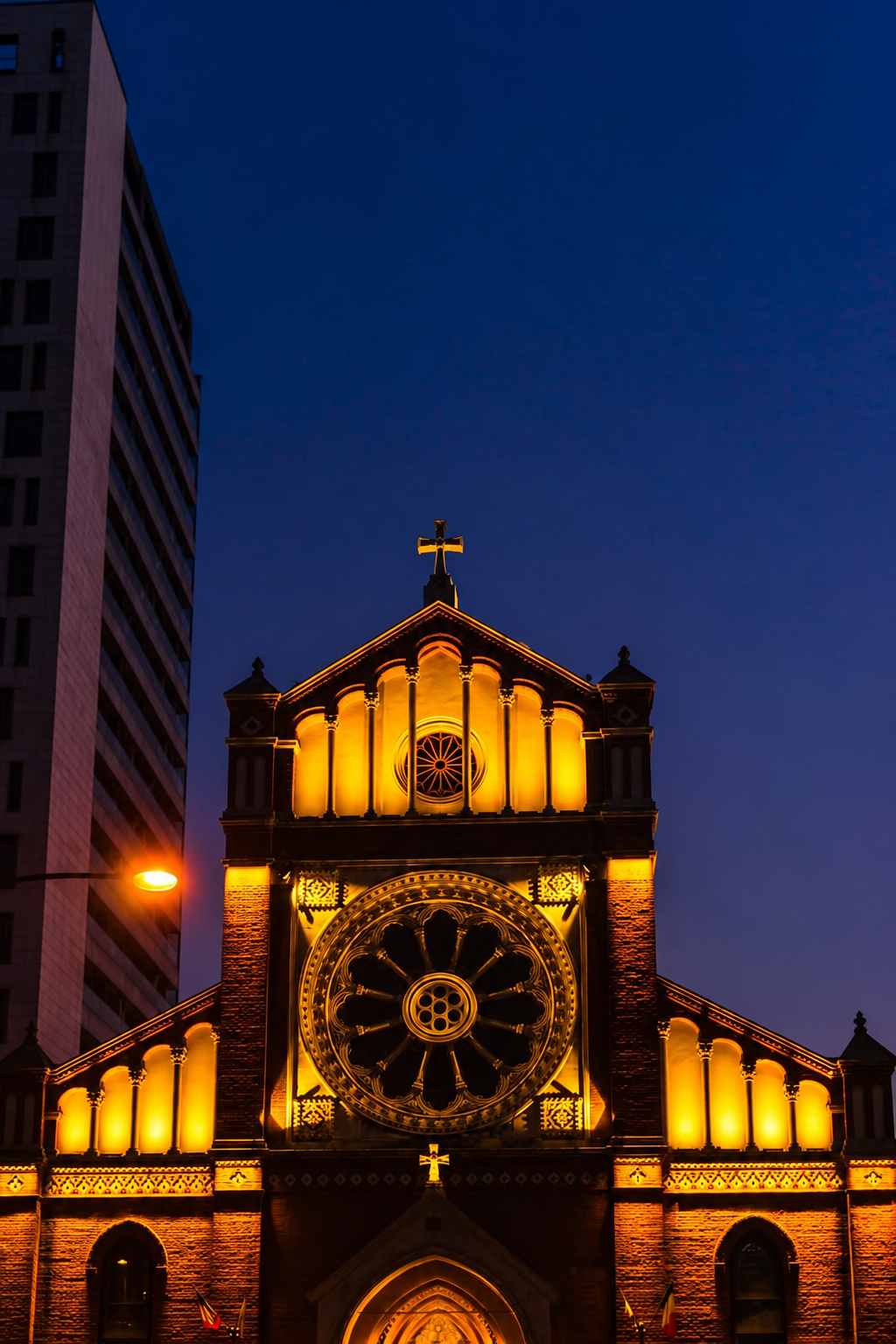
Emotion Has No Fixed Color Temperature
2700K doesn’t guarantee intimacy, just as cool light doesn’t automatically create a sense of distance. Intensity, angle, the material receiving the light, and the surroundings all matter.
We can use warm light and still make a façade feel harsh if there are too many sources, they cause glare, and every detail demands attention. We can also use cooler light in a restrained composition that keeps materials and proportions clear.
It’s satisfying when our choices make sense for the building and the people who see it, beyond our own preference for a particular shade.
A Building Belongs to Its Surroundings
An illuminated façade becomes part of the life of the street. People see it up close, while walking past, or from a window across the road. Around it are other buildings, plants, signs, and people trying to get home.
We can create a striking image while also shining light into someone’s bedroom. That’s why we care about what happens outside the carefully framed image shown in a presentation. Where does the beam end up? What does a pedestrian see? How long does the whole system need to stay on?
A building can have a presence without dominating everything around it.
When Does It Begin to Move Us?
We don’t expect every passerby to feel the same thing. Nor do we think every project has to impress. Sometimes, making someone want to slow down and take a closer look is enough.
A successful project gives you a reason to look at the architecture again. You take a small detour, stay a few seconds longer, and something about the place begins to affect you.
For us, the emotional effect of lighting also has to do with how we feel in the city after sunset. We’re interested in a building that has a presence while leaving room for darkness, for people resting nearby, and for living things that need the night. The idea of an “infrastructure of darkness” brings this consideration into design: we also choose which places to protect from light.
This balance connects atmosphere with our sense of well-being. We want to be able to look at a building, stop nearby, and feel comfortable staying there without the lighting constantly demanding our attention. Lighting design can move us through this restraint, too—by giving us room to enjoy the evening and letting night still feel like night.
