

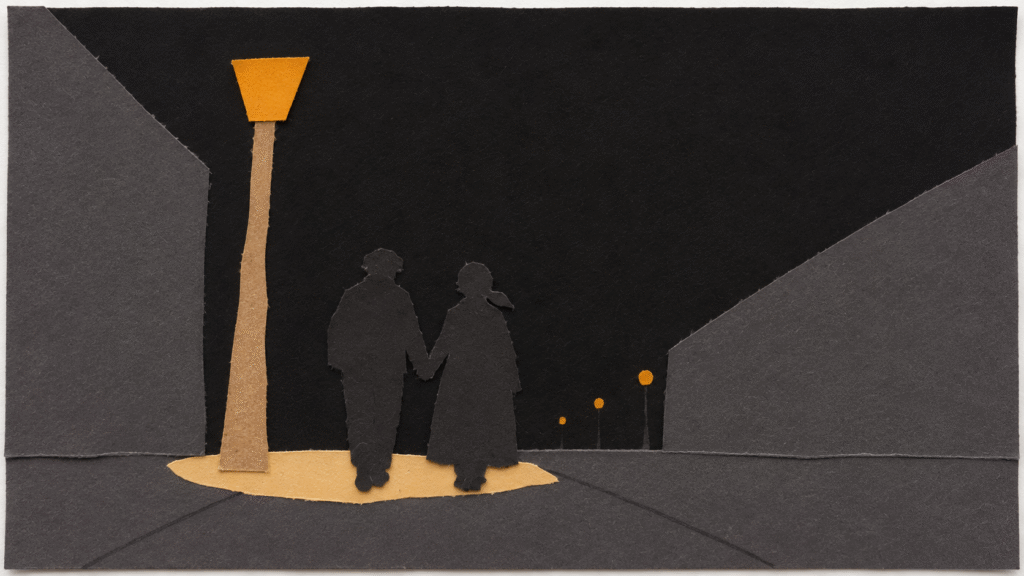
In 1807, Pall Mall, a street in central London, was the site of one of the first public demonstrations of gas street lighting. By the 1820s, you could walk to the theatre in the evening along streets already lit by gas lamps, then come home and read by candlelight or by an oil lamp. How much light you had at home depended largely on what you could afford.
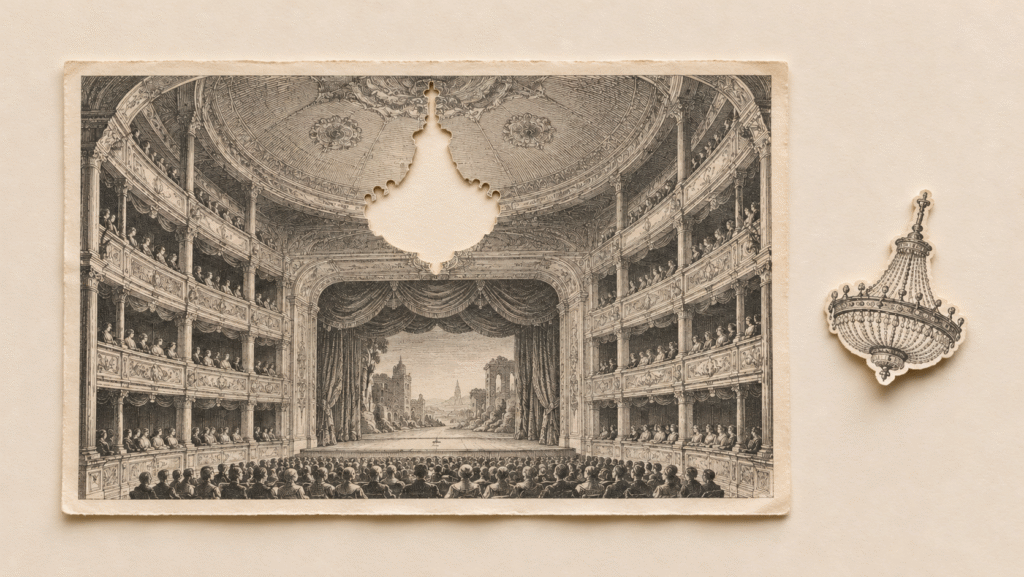
In many London theatres, the house lights stayed on during the performance. At the King’s Theatre, a gas chandelier lit the auditorium from the centre, and candles burned in front of the boxes. In 1828, the management took down the chandelier.
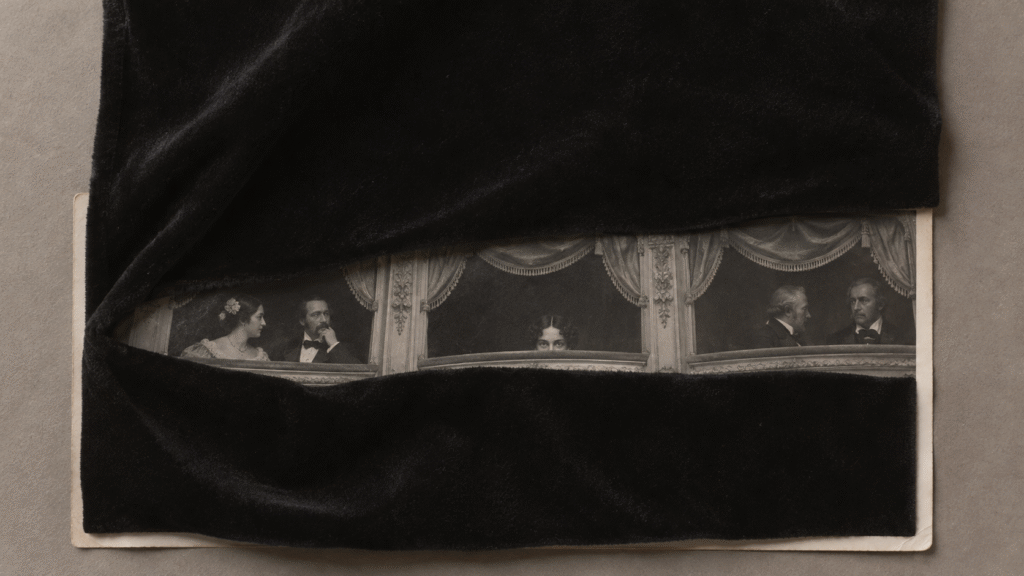
The Times noted that the scenery was easier to see, but it also explained what theatregoers stood to lose if they came to see who else was there and to be seen themselves. In the dim light, it was harder to make out the people in the boxes opposite.
Around the middle of the nineteenth century, a note in a prompt book called for the lights in the side boxes and the chandelier to be turned down halfway during one scene. With gas, you could do that by turning a valve. Reduce the flow and the flames would shrink.
When you needed more light again, you opened the valve a little further. Charles Kean, an actor and theatre director, cared a great deal about inventive sets and costumes and how lighting could bring them out. One critic pointed out that many of Kean’s spectators would have been just as happy for the actors to wear a different kind of armour, as long as it looked authentic. So they probably wondered, why go to the trouble of using light to bring out a detail that few people could date? Maybe because you don’t need to know which century the armour comes from to feel the weight of the metal on the actor’s shoulders.
Lewis Carroll saw a performance in which beams of light seemed to come through the ceiling and gradually reveal a few figures. He wrote in his diary that he almost held his breath. Around the same time, a reader who signed herself Arabella complained in a letter published in the press that theatre managers thought only about effects onstage and overlooked the fact that many women went to the theatre to see and be seen. The dim light took away some of the pleasure of the evening. Carroll was caught up in what was happening in front of him. Arabella wanted to look around and be seen herself.
In that sense, the opera doubled as the Tinder of its day. You could see who’d turned up, try to catch someone’s eye and see if they looked back, but you had to be able to see as far as the box opposite.
In a well-lit opera house, you could hear the rustle as people turned the pages of their librettos almost in unison. Towards the end of the 1800s, when some performances took place with the house lights off, audience members complained that they couldn’t read their librettos anymore. For them, following the opera also meant following the words on the page. By the early 1900s, audiences were already being warned to arrive on time, because it was hard to find your seat once the lights went out. Some people brought their own lights. The person who wanted to read could see the page again, while the person next to them who’d come to enjoy what was happening onstage now had a light on beside them.

I find it interesting how quickly light changes the rules between people. When the chandelier came down, the people who wanted to see each other were the ones who were unhappy. A few generations later, it was the person who brought their own light who bothered everyone else. Today, all it takes is for a phone to light up two rows ahead of you. It’s hard to accept a change the moment it gets in the way of something you’re used to, whatever century you live in. Whatever we do, some people will push back against change. I believe art should always disturb us, at least enough to make us wonder why it seems so natural for things to happen a certain way.
As early as the nineteenth century, some theatre makers were willing to leave things in shadow so that light could suggest more. The beams Carroll describes made a dream visible, and light was already doing something you could call surreal. It can bring something into view that, in everyday life, you could only imagine. And I think it’s sad that, more than a century later, I still hear people say the job of lighting in theatre is to make sure you can see the actor.
