

Standardization is right at home in office lighting. 4000 K is used as though it were the law. Neutral white is the default, and the explanation often ends with that’s what we use in offices. What does it have to do with the space, the daylight, or the people working there? We rarely ask anymore.
Then come the pendant globes, tubes, and track lights- we see them everywhere. Sometimes they fit, but too often the project seems designed around the supplier’s stock. These are the products we have and the idea has to come out of them.
Why do we start with the catalog?
Why have we stopped drawing and designing lighting fixtures? We should start with the light distribution we need, with beam angles and optics developed for that particular place, and then find or build the fixture that can deliver it?
The Sun
An office has windows, an orientation, seasons, and working hours. It looks different in the morning and afternoon, and a desk by the window receives different light from one in the middle of the room. Why do we treat them the same?
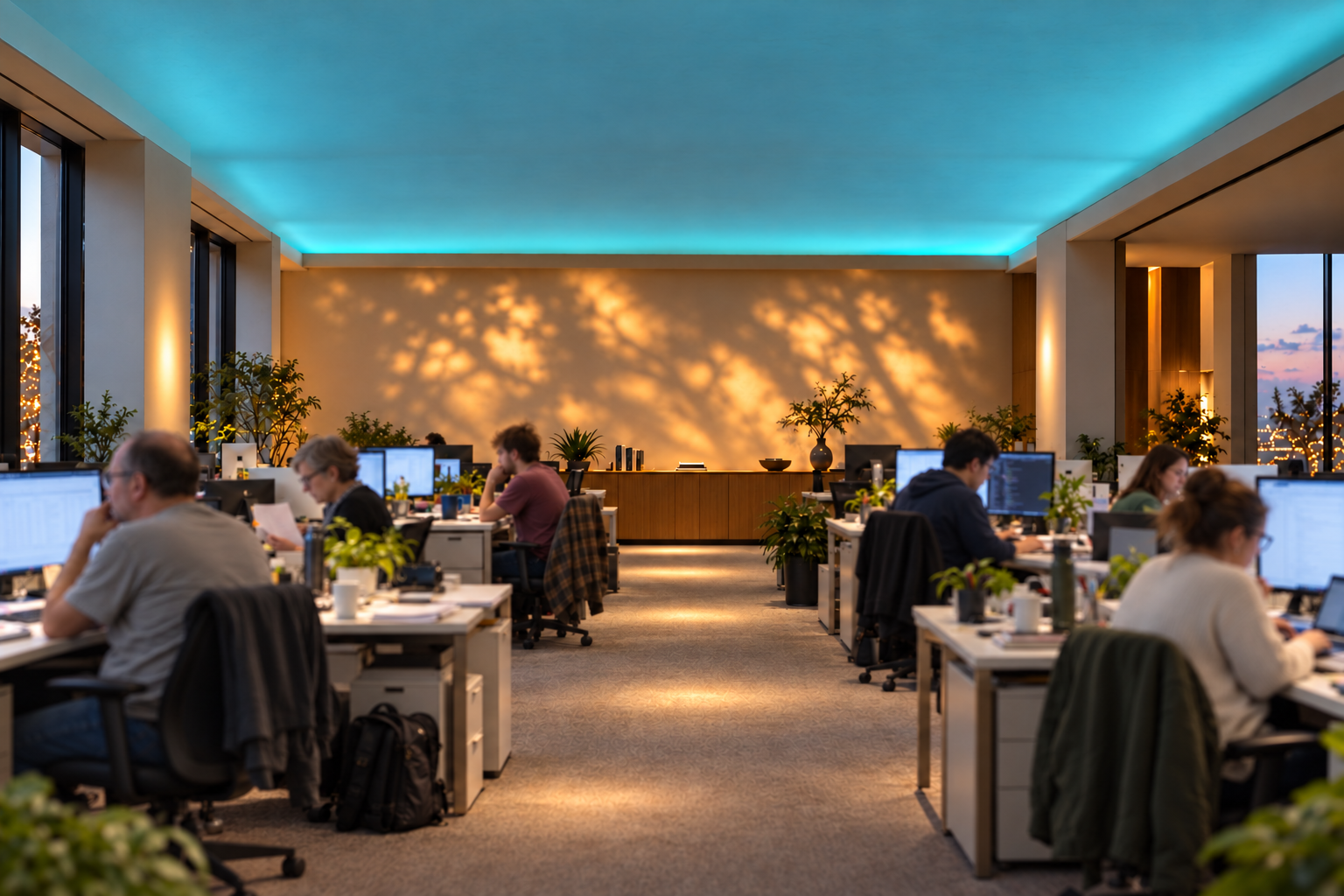
We need to consider circadian rhythms, the sun’s daily cycle, and the available daylight. That means understanding people’s light exposure throughout the day and adapting the lighting to their needs. A fixed color temperature doesn’t solve this, and automatically changing the shade of white doesn’t replace the design either.
An office is not a production factory
An office needs to be a creative space as much as a functional one. And a creative space lit entirely by general lighting does not exist.
We need enough light only where we work. We can create differences without sacrificing visibility or comfort.
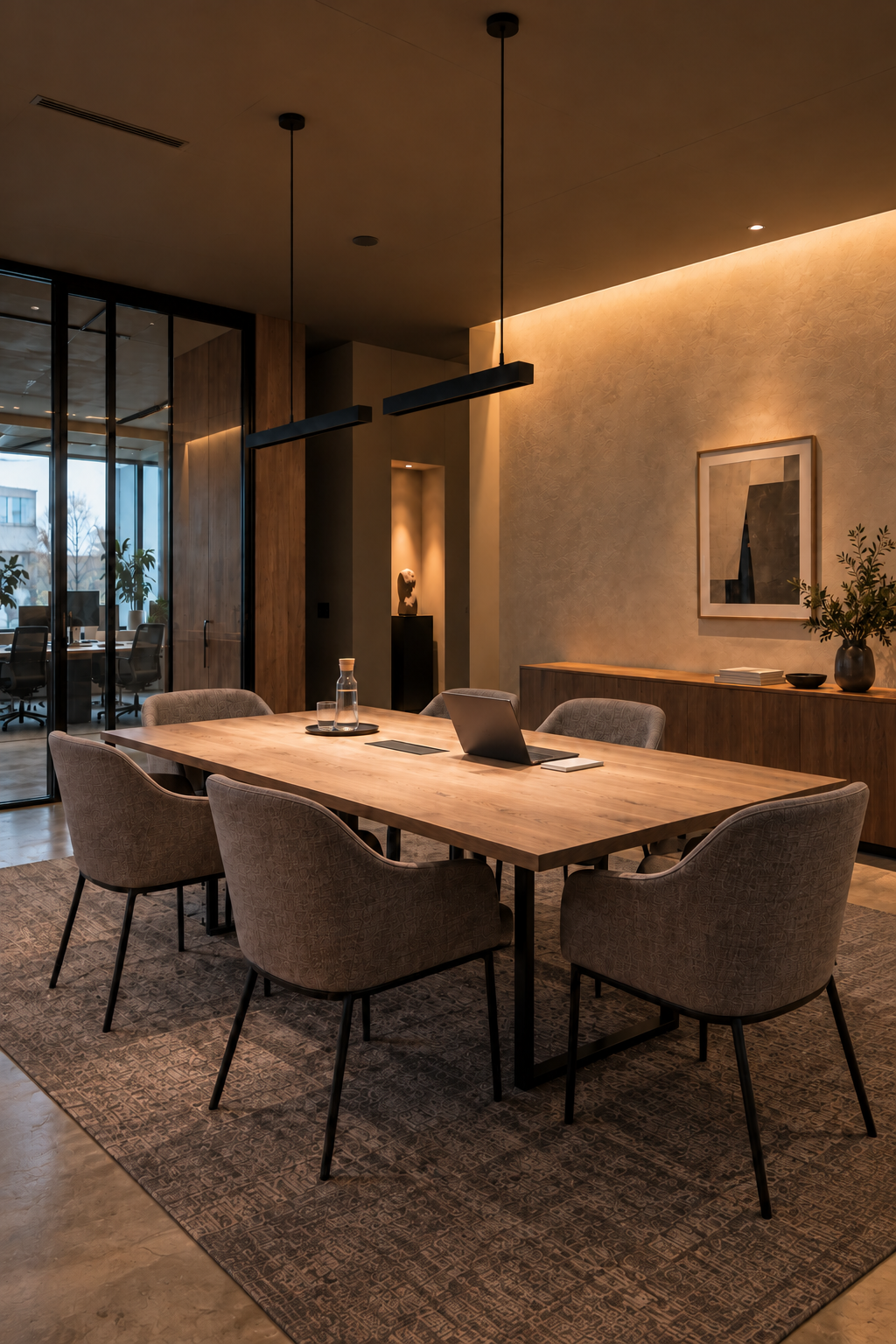
A theatrical approach to the space considers what we see from each position, the background walls, the accents, the task areas.A lit wall can give the room a different personality, while light above the table can support conversation and the surrounding space remains more subdued. The ceiling can contribute to the composition without becoming aggressively bright or, instead, become the main visual element.
What do we gain?
Quality light sources(high CRI), suitable optics and glare control need to support this freedom of composition. Creativity requires precision, too.
In a client meeting, it matters that we can see each other clearly, look around comfortably, and spend time in a space that shapes our personality. For employees, it matters how that same room feels after hours of work.
